

Selene States
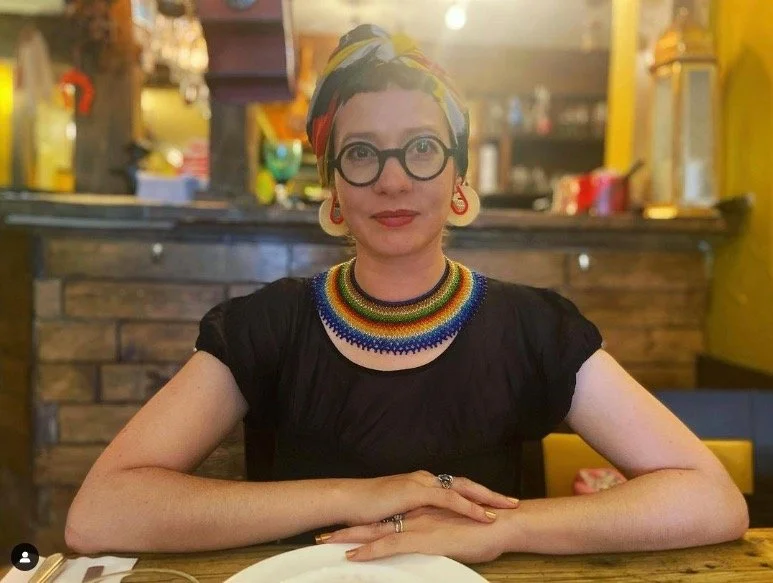
Selene States is a visual artist and educator working across textiles, fashion, and fine art. She explores how historical patterns, images, and crafts carry across time and cultures. As a cultural translator, she approaches the past as a foreign country to critically refract contemporary nostalgia for ‘simpler times.’ Her practice focuses on how familiar motifs, especially those tied to the home and women’s work, shape shared experience. For her research at the Bauhaus University, she created a series of women’s pajama ensembles inspired by historical fabrics and home-sewing patterns, highlighting the creativity found in domestic craft. By carefully recreating garments from the past, she invites viewers to rethink the boundaries between art and craft and to see fashion as cultural knowledge.
Selected Works
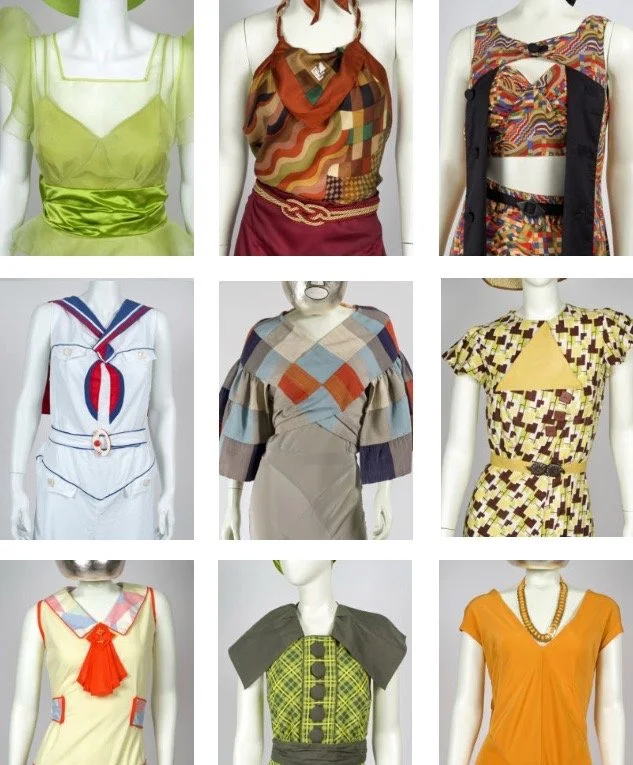
3 fashion ensembles, 2026
as part of Our Very Fabric
Selene States’ practice-based research examines the radical history of women wearing and making -trousers through a creative methodology centred on re-making interwar home-sewing patterns. By patterning the limitations of “authenticity” in her use of materials and methods for historical everyday dress recreations, she uses reproduction as a functional investigation of vernacular creativity. Avant-garde pattern blueprints serve as the foundation of a contemporary pantsuit collection that honours radical women makers while interrogating the limits of their circulation and influence.
The reconstructed 1920s lounging pyjama layers Bauhaus textiles, the history of readymades, and recursive acts of reproduction to critique gendered hierarchies between art and craft, exposing the systematic erasure of women’s authorship within design history. The iconic 1970s Liberty of London scarves used to realise the historically “authentic” pattern are themselves a re-appropriation of Gunta Stölzl’s Slit Tapestry Red Green (1927). Their “readymade” status highlights how women’s modernist innovations were repeatedly absorbed, commercialised, and detached from their makers.
The “jazzy” dance pajama foregrounds swing dance of the Harlem Renaissance as a site of Black pride in modernity and its “vintage” nostalgic whitewashing. The use of a Dutch “Hollondaise” cloth retraces the hybrid cultural origins and trade routes of the African wax print to address cultural appropriation, racial code-switching, and the entangled routes of the slave trade and colonial extractivism embedded within Art Deco aesthetics and textile production.
The “Anni Albers” ensemble bridges interwar-period design and contemporary sustainability through natural dyeing and zero-waste construction. The zero-waste wrap is composed from naturally dyed silk, based on a pattern from Bauhaus journal Die Neue Linie; its structural composition follows the colour harmony principles advocated by Jewish Bauhaus textile artists like Anni Albers, exiled as ‘degenerate’ in the Third Reich. The “fugitive” nature of colour articulates historical erasure, displacement, and the fragile transmission of Bauhaus women’s legacies under fascism.
